


A Place Called
Roles: Game Design, Sound, Level Design
Tools: Unity, Reaper, Photoshop
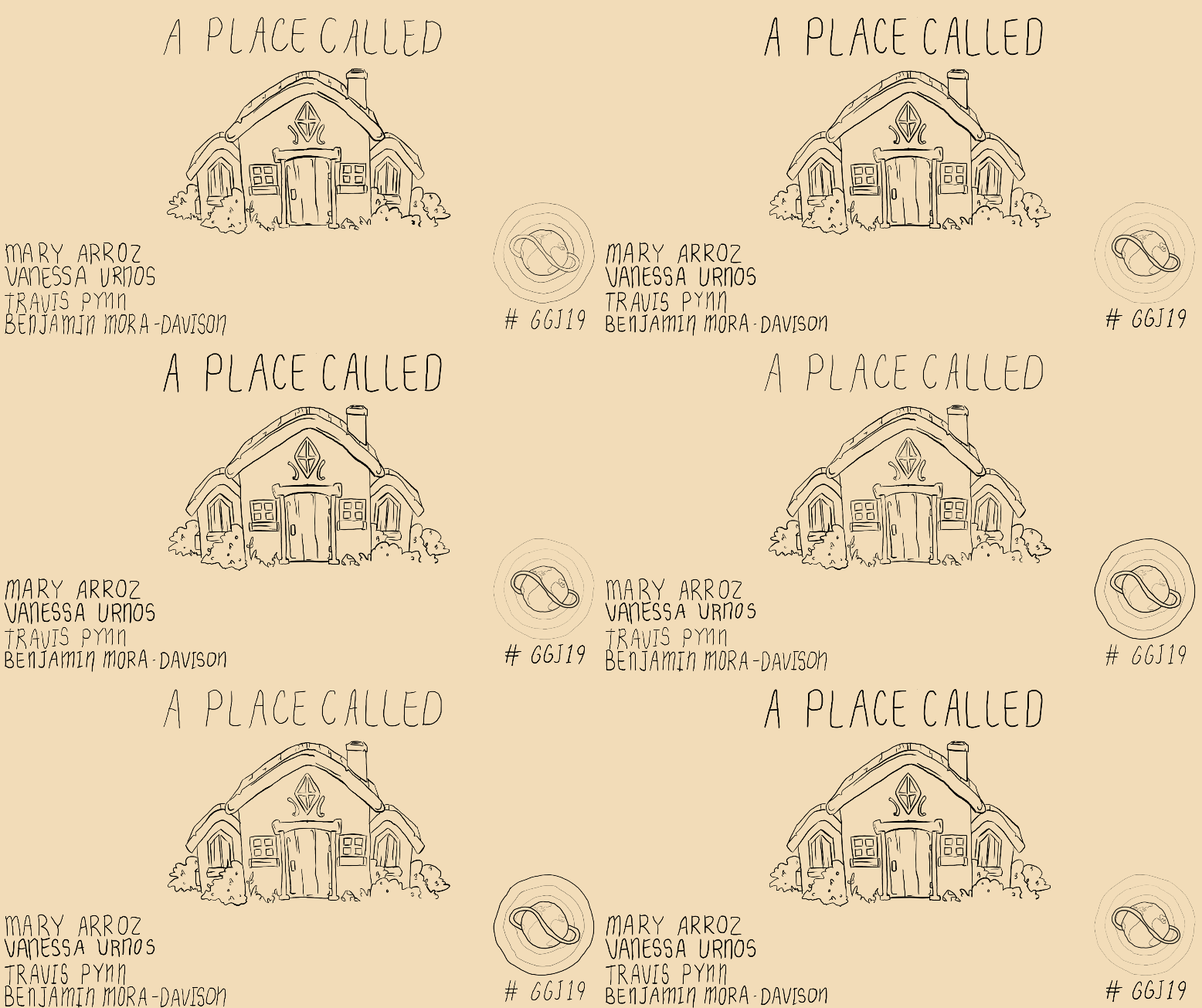
A Place Called is a serene experience that illustrates the contrast between the comfort of home versus the uncertainty of the outside world. It was developed by a team of four for Global Game Jam 2019.
It aims to demonstrate how people grow along with their homes, and how they can create both physical and emotional connections.
Challenges & Solutions
Game feel was one of the biggest challenges when designing A Place Called. How do we convey the feeling of peace & tranquility within one location, while juxtaposing it with feelings of anxiety elsewhere? Not only that, but how were we to amplify the feeling of comfort within the home as the game progressed?
Our solutions to these problems came down to intricate audio and visual effects. Almost everything in the game starts out with a monotone colour palette, but the objects you collect in the world are fully coloured. This also indicates to the player what they can interact with. The more the player decorates their home, the more vibrant and colourful it becomes.
The same effect is applied to the music. One simple instrument slowly turns into a more complex piece with pleasant sounds such as wind chimes and steady drums. The music also utilizes 3D space, and only plays near the player's house. This is also a way to help the player find their way home - they can follow the music.


Another (perhaps obvious) challenge was the requirement to complete this project from start to finish over a single weekend. It can be daunting when it seems there's so much to do with so little time, but we pulled it off.
Day one was all about design. In fact, we didn't even touch Unity until Saturday. We split up our roles, started drafting, and considered what "home" meant to us.
Thanks to our planning, the rest of the weekend went incredibly smoothly, and we were both proud and able to submit our build on time.
Reflection
Looking back, there's certainly some things about the game that could be improved. For one, the map is way too big. Anybody who wasn't on the development team would get easily lost while searching for any of the items that weren't near the house. Second, the goal isn't immediately clear to the player. Unless reading the GGJ page, which explains that there are nine items to collect around the map, most players probably wouldn't know what to do at first.
As for things I learned from this project, there are a few. Although small scale, this was my first time experiencing the full game development pipeline, from conceptualization to publication. This fact alone made the experience worth it, but I also learned the true value of planning ahead and working as a team. When we first started, I really wasn't sure we would be able to make a whole game in just two days, but I soon learned that a team working in harmony can achieve more than the sum of its parts.
Play
Want to give the game a shot? Check it out on the GGJ website here. Download the "Build" folder, extract its contents, then run "Home.exe" to play! (PC only)